Ball vs Gate Valves: When to Choose Each for Industrial Lines
Choose a ball valve for quick shutoff and tight sealing in moderate pressure lines. Select a gate valve for full-bore flow with minimal pressure drop in high-capacity service. Match the type to your flow rate, pressure, and maintenance cycle.
- Ball valves offer quarter turn operation and are best for isolation and tight shutoff.
- Gate valves provide low pressure drop when open but are not designed for throttling.
- Material compatibility and pressure rating must match the specific fluid and line conditions.
- Maintenance frequency often drives the long term cost of valve selection.
Selecting between a ball valve and a gate valve is a decision based on how the line will operate. The choice affects flow efficiency, maintenance schedules, and the service life of the equipment.
How the Flow Mechanism Differs
A ball valve uses a spherical plug that rotates to open or close the flow path. This is a quarter turn valve. One quarter rotation of the handle or actuator moves the plug from the open position to the closed position. The plug seals against the valve body. When fully open, the ball sits in a bore that matches the pipe size, allowing fluid to pass with minimal obstruction.
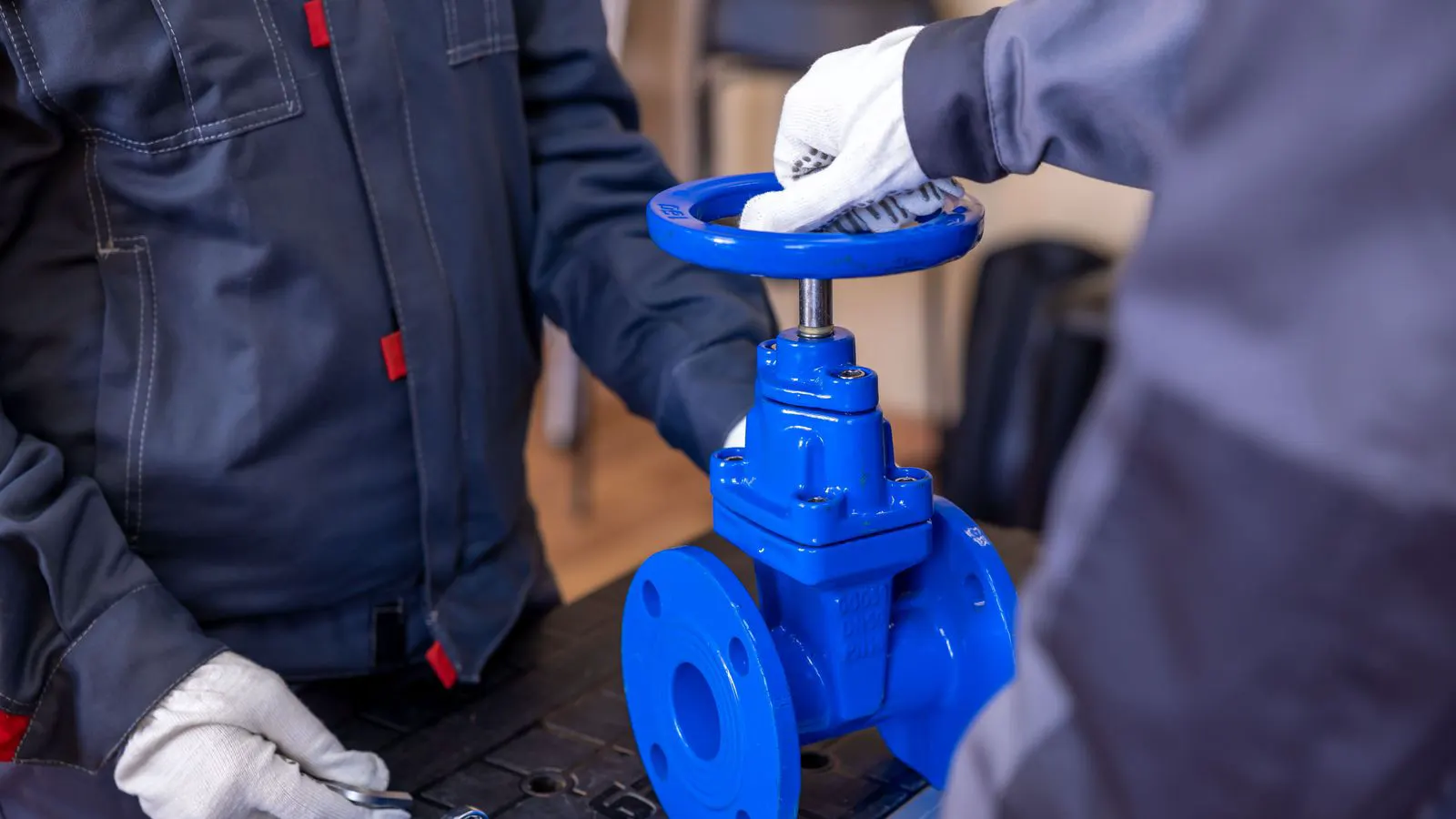
A gate valve uses a wedge or disc that slides along the pipe axis. The gate moves up to open the valve and down to close it. This is a full turn valve. Opening a gate valve often requires multiple rotations of the handwheel. When fully open, the gate clears the seat completely. The flow path is nearly straight. This design creates very little resistance to the fluid.
The difference in movement matters for control systems and manual operation. A ball valve responds quickly. A gate valve requires more time and effort to operate.
Comparison of Key Characteristics
| Option | Best for | Limitations |
|---|---|---|
| Ball valve | Quick shutoff, tight sealing, automated control, moderate pressure lines | Can suffer from sticking if the fluid is viscous or contains solids |
| Gate valve | High flow rates, low pressure drop, full bore applications, low temperature service | Slow operation, not suitable for throttling, longer time to close |
When to Choose a Ball Valve
Ball valves are the standard choice for many isolation points. If the valve needs to shut the line off quickly, a ball valve is usually the better fit. This applies to steam lines, compressed air systems, and many chemical process lines where isolation speed is a priority.
The sealing performance of ball valves is strong. The spherical plug contacts the seat from multiple points. This creates a reliable seal. For on off valve applications, this is a significant advantage. The seal remains tight even after the valve has been operated many times.
There are specific conditions where ball valves work well. The fluid should be clean or free of large abrasive particles. If the fluid contains grit, sand, or heavy sludge, the ball can become stuck. The material of the ball and the seat must match the fluid. For corrosive liquids, PTFE lined seats or metallic seats may be required.
Maintenance for ball valves is generally simple. If the valve sticks, it can often be freed by applying appropriate lubricant or by replacing the seat. The body itself is usually cast bronze or steel. The internal components are replaceable.
When to Choose a Gate Valve
Gate valves are favored when the line requires maximum flow capacity. Because the gate moves up and out of the flow path, the internal bore is essentially the size of the pipe. This results in a very low pressure drop when the valve is open. In high capacity lines, such as large water mains or heavy industrial steam headers, this efficiency is a major benefit.
The main limitation is operation speed. A gate valve is a full turn valve. It takes time to open and close. For this reason, gate valves are rarely used for throttling. Throttling means partially opening the valve to control the flow rate. If a gate valve is left partially open, the flow can create turbulence. This can cause vibration and wear on the gate and seats.
Gate valves are also sensitive to temperature and pressure. Standard gate valves are not rated for very high temperatures or extreme pressure differentials. If the line operates under these conditions, a different valve type or a high pressure rated gate valve is needed.
The body of a gate valve is usually made of cast iron, ductile iron, or steel. These materials are robust and cost effective. The gate itself is often made of a harder material to resist wear.
Flow Control and Throttling Considerations
This is one of the biggest factors in industrial valve selection. If you need to adjust the flow rate continuously or frequently, a ball valve is generally a poor choice. Standard ball valves are designed for on/off operation. Using them for throttling causes premature wear on the seats. The plug rubs against the seat while partially open. This damages the seal and reduces the valve life.
Gate valves have the same problem. They are not designed for throttling either. The gate rubs against the seat, causing erosion. For flow control applications, a different valve type is usually required, such as a globe valve or a control valve.
If the line only needs to be open or closed, both ball and gate valves are suitable. The decision then shifts to speed, pressure drop, and maintenance.
Material and Pressure Selection
The material of the valve body and internal parts must be compatible with the fluid. A ball valve with a PTFE seat is suitable for many non aggressive fluids. It is not suitable for hot solvents or oils that can degrade the plastic. A gate valve with a bronze body may not handle high temperature steam or aggressive chemicals.
For high pressure lines, the valve body must be rated for the maximum operating pressure. A ball valve and a gate valve with the same nominal size may have different pressure ratings. Always check the manufacturer data for the specific class. For example, a Class 600 ball valve can handle higher pressure than a Class 150 ball valve. The same applies to gate valves.
The connection type also matters. Flanged connections are common in high pressure and high temperature service. Bolted connections allow for easy maintenance. Threaded connections are used in lower pressure lines where disassembly is less frequent.
Maintenance and Long Term Cost
Maintenance is a significant part of the total cost of ownership. A ball valve that sticks due to debris or corrosion may require frequent cleaning. A gate valve that develops a leak at the seat may require a full replacement of the gate or the entire valve.
The frequency of operation affects the choice. A ball valve operated hundreds of times per year may wear out its seats faster than a gate valve operated a few times per year. However, the gate of a gate valve can also wear if the valve is operated slowly under load.
Inspecting a ball valve is easy. The handle position indicates the state. Inspecting a gate valve often requires removing the bonnet to check the gate position. This takes more time and may require the line to be isolated.
For high maintenance environments, such as food and beverage processing, ball valves are often preferred. They can be cleaned easily and are less likely to harbor bacteria in the crevices. Gate valves have more internal surfaces where debris can accumulate.
Final Selection Criteria
To make the final decision, review the operating conditions of the line.
- What is the fluid? Is it clean, viscous, or abrasive?
- What is the pressure and temperature?
- How often will the valve be operated?
- Does the valve need to throttle or just isolate?
- What is the budget for maintenance?
If the fluid is clean and the valve needs to close quickly, choose a ball valve. If the fluid is clean and the valve needs to stay open to allow maximum flow, choose a gate valve. If the fluid is abrasive or the valve needs to throttle, consider a different valve type.
The ball valve vs gate valve decision is not about which one is better. It is about which one fits the specific requirements of the line.
Frequently asked questions
Can a ball valve be used for high pressure steam?
Yes, but only if the body and seats are rated for the specific steam pressure and temperature. Standard ball valves may not handle the thermal shock and high pressure of steam service.
What is the main advantage of a gate valve over a ball valve?
Gate valves have a lower pressure drop when fully open because the flow path is clear of the internal plug. This makes them suitable for high flow applications.
Is a ball valve better for automated systems?
Yes. The quarter turn motion of a ball valve is ideal for pneumatic or electric actuators. It requires less force and moves faster than a full turn gate valve.
Can I use a gate valve for throttling?
No. Gate valves are not designed for throttling. Partial operation causes wear and vibration. Use a globe valve or control valve for flow regulation.
How do I know if a valve is stuck?
If you cannot turn the handle or handwheel, or if it requires excessive force, the valve is likely stuck. This is often caused by debris, corrosion, or a damaged seat.